46%
Post-harvest losses
Lost between cutting and market when threshing is delayed.
Grown in Ghana. Built for tomorrow.
Solar-powered machines. Locally built. Helping farmers keep more grain, earn more income, and grow a better future.


A harvest is more than grain. It is a season of hard work, a family’s income, and the promise of what comes next. We build the tools that help farmers protect it.
From hybrid solar-powered threshers to practical community training, Wobil connects local ingenuity with real opportunity.
Our storyDelayed, inefficient threshing and manual grain cleaning destroy a huge share of what smallholder farmers grow exactly when climate pressure makes every harvest count more.
Sprouted rice and broken grains: the cost of delayed and manual threshing, up close.
Post-harvest losses
Lost between cutting and market when threshing is delayed.
Grain breakage
Cracked by manual processing — and broken grain sells for far less.
Slower by hand
Manual threshing against a single machine pass, mostly done by women.
CO₂ a year, per machine
Emitted by the diesel alternative, on fuel a farmer has to buy.
Our answer: under 0.3% breakage, 30× faster threshing, and near-zero operating emissions.
See the machinesLocally manufactured, hybrid solar-powered, and field-proven. Two machines in the field today, with more on the way.
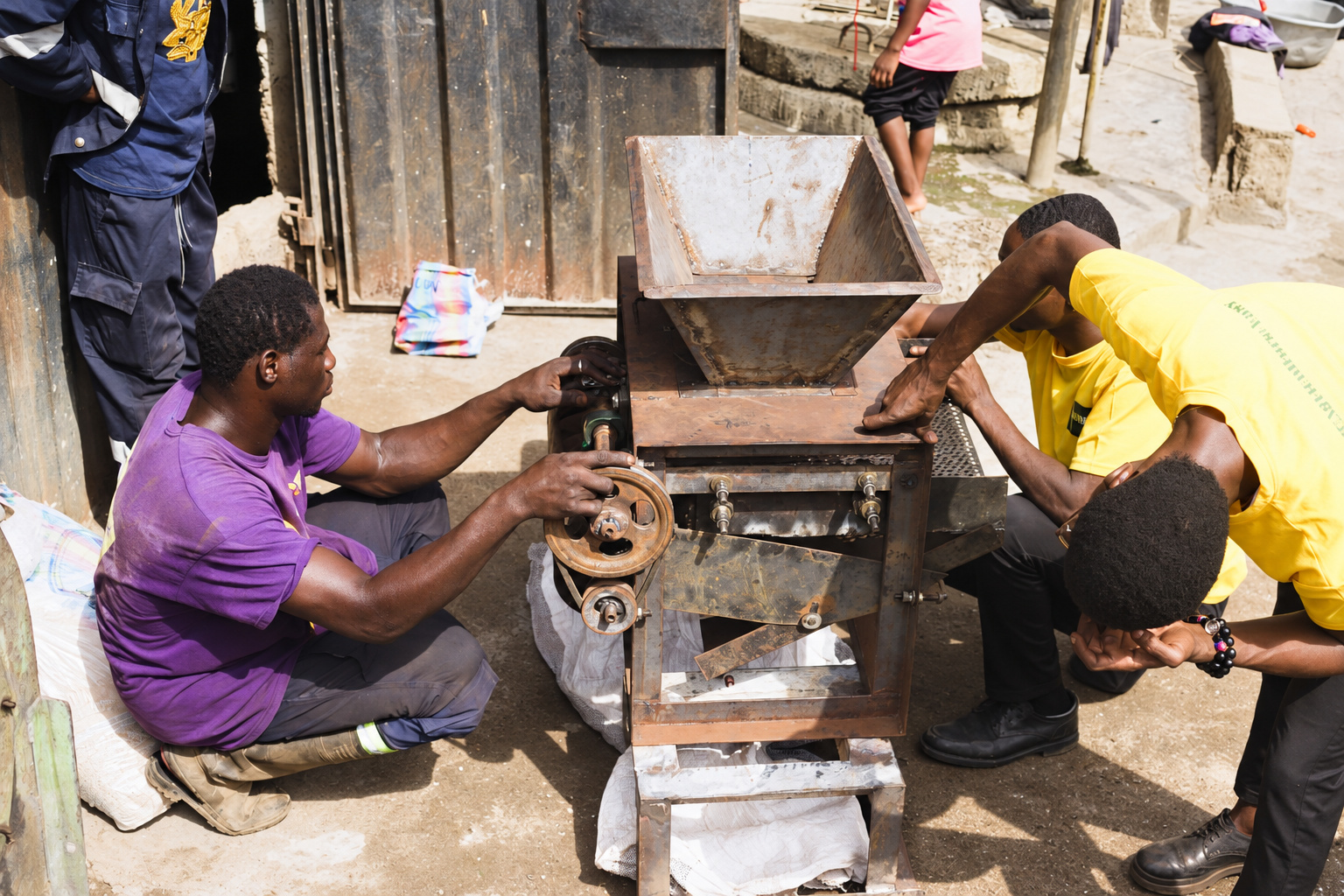
Every Wobil machine is designed, fabricated and tested locally, at Suame Magazine in Kumasi. That means faster repairs, local jobs, and machines built for the realities of African fields.

See our thresher at work: practical technology turning a demanding job into a faster, gentler process.
Explore the technology ↗Every figure below traces back to a real harvest, a real income, a real job.
Across rice-producing communities in Ghana's Ashanti and Volta regions.
Metric tonnes threshed and cleaned through our machines and services.
Additional income (~$379,153) captured by reducing losses and maintaining quality.
In fabrication, assembly, operation, maintenance and outreach.
Female participation among paying customers are by design, not by accident.
Ashanti and Volta rice corridors.
Our work aligns with these United Nations Sustainable Development Goals through practical action in agriculture, energy and livelihoods.


The content of this publication has not been approved by the United Nations and does not reflect the views of the United Nations or its officials or Member States.
We meet farmers where they are. No farmer should be locked out of mechanization by upfront cost.
Farmers pay only for what they process, no machine to buy. Mechanization without the upfront cost.
Explore this service ↗Buy a thresher or winnower outright, with training and a 12-month warranty included.
Explore this service ↗12–24 months
Through partner financial institutions and agrifintechs, cooperatives can own equipment and pay over time.
Explore this service ↗We keep machines running with spare parts, servicing, operator training and technical support.
Explore this service ↗From food processing to sustainable farming to record keeping, our training helps rural communities turn skills into income, in partnership with Access Agriculture and local extension agents.
Explore our training→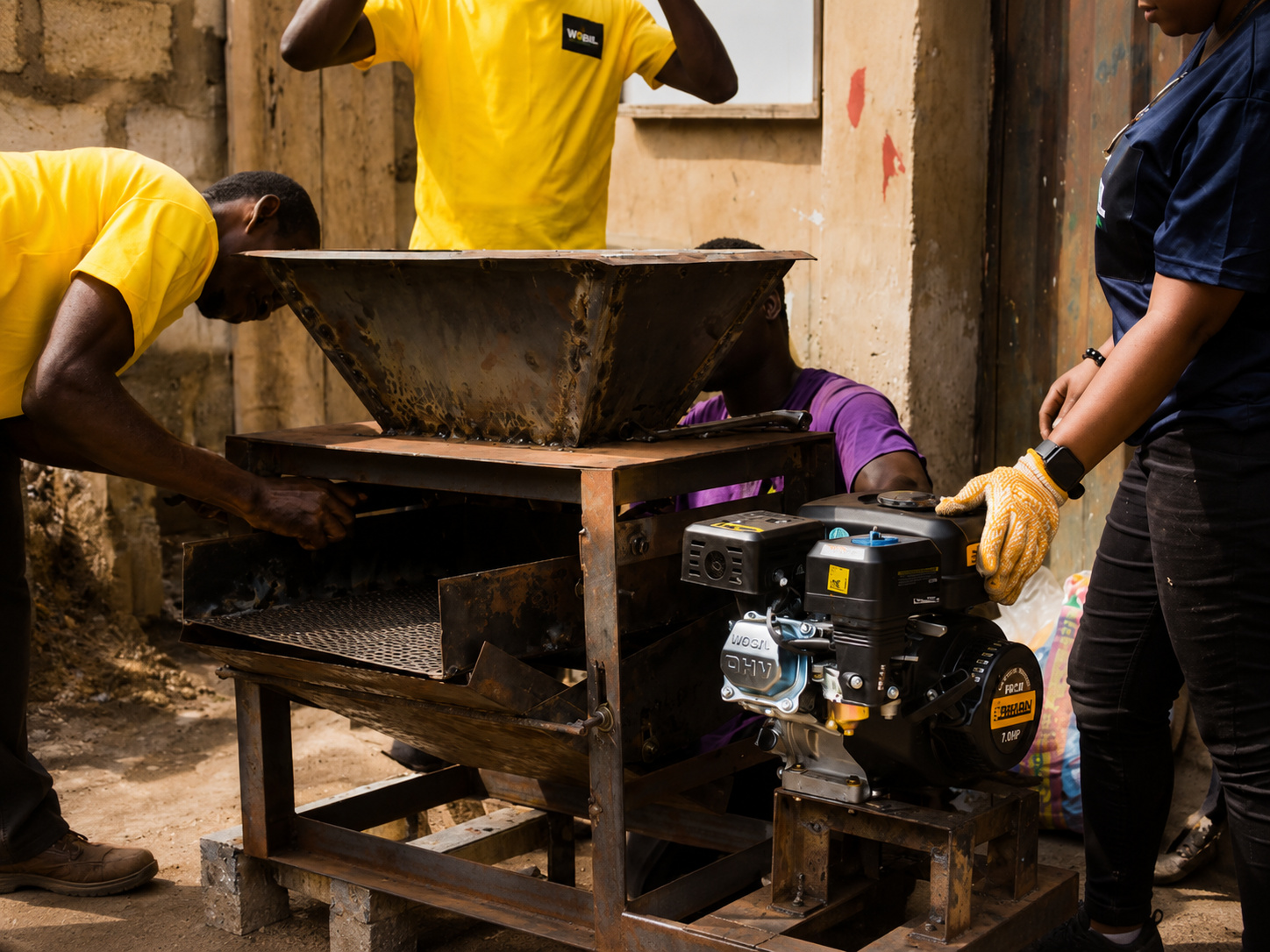
people trained in the Ashanti Region
Real results from the communities we work with across Ghana.
Four perspectives. One purpose. Meet the farmers, engineers and business minds making agriculture easier.
Chief Executive Officer
Electrical engineer, inventor and rice farmer with 12+ years in agricultural machinery. He led development of the patent-pending multi-stage thresher and oversees engineering and manufacturing.
Chief Finance & Marketing Officer
Growth marketer with 8 years of experience leading Wobil's finance, supply chain, commercialization, partnerships, fundraising and growth strategy.
Human Resources and Partnerships Lead
Agricultural economist and agribusiness expert with 7 years of experience, leading people, partnerships and community engagement across Wobil's operating districts.
Director of Technical Operations
Rice farmer and agricultural machinery specialist with 17 years of experience, overseeing fabrication, field deployment and technical operations.
 Articles
Erica Appiah shares how community needs shaped Wobil’s beginnings and the move into hybrid solar machinery.
Read on Disrupt Africa ↗ Articles
UNU-INRA profiles Erica Appiah’s entrepreneurial journey and recognition through the INFoCAT programme.
Read the UNU-INRA story ↗ Articles
WIPO follows the development of Wobil’s rice thresher and its early work with Ghanaian farmers.
Read WIPO Magazine ↗Book a pay-per-use threshing service, or talk to us about owning a machine for your cooperative.


